The films
Where in the spine
Cervical
C1
C7
Thoracic
T1
T12
Lumbar
L1
L5
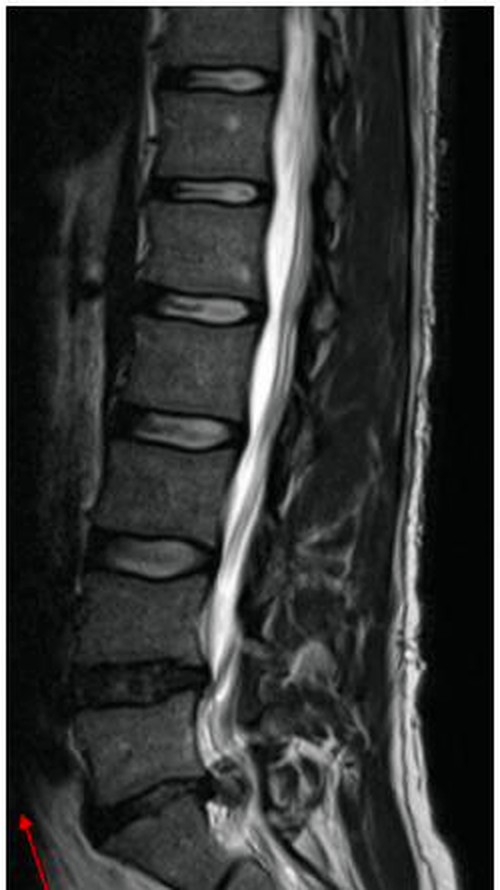
◀ herniated disc — resolved without surgery
Sacrum & pelvis
S1
One disc, at the very bottom of the spine.
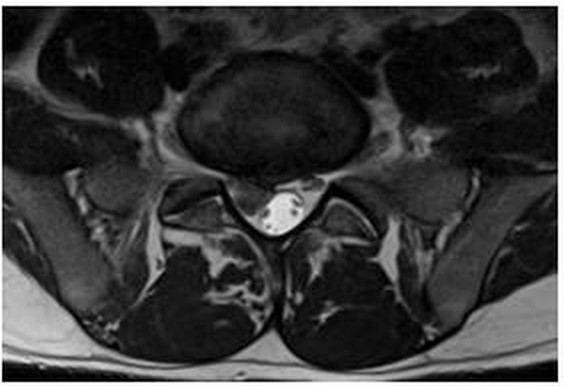
L5-S1 is the last mobile disc — the junction between the spine and the pelvis, and the most commonly herniated disc in the body. A fragment of it pressed on the nerve root that runs down the leg, which is why the leg symptoms outran the back pain.
Most fragments shrink and the nerve calms down without an operation. This one did.
L5-S1 herniation — treated without surgery
The course, in order
- Week 0Lifting injuryWork lifting injury; severe back and leg pain building over days.
- Week 3Hospital admissionCouldn’t walk. MRI: L5-S1 herniation compressing the nerve root.
- The decisionTreat without surgeryMost herniations this dramatic still resolve on their own — with close follow-up in case weakness progressed.
- Weeks 3–9Meds + therapyStructured PT for six weeks, work restrictions for four.
- Week 6+Full dutyBack to work without restrictions. No operation.
Presentation
Lifting injury at work three weeks prior; severe back and leg pain with associated weakness, admitted to the hospital because he could not walk.
Imaging
MRI confirmed an L5-S1 disc herniation compressing the nerve root.
Decision
Even a herniation dramatic enough to cause a hospital admission will resolve without surgery in the large majority of patients — 70–80 percent.
What was done
Medications, structured physical therapy for six weeks, work restrictions for four weeks — and close follow-up in case the weakness progressed.
Full duty at 6 weeksNo restrictionsNo operation
"A dramatic MRI is not, by itself, an indication for surgery."
All cases shown are real patients treated by Dr. Andrew Pugely, presented with de-identified imaging for education. Every spine — and every recovery — is different: individual results vary, and nothing on this page is a guarantee of outcome or a substitute for an in-person evaluation.
Have a case like this one?
Complex, revision, and workers' compensation spine referrals are seen quickly — call the office or start with the workers' comp team.