The films
Where in the spine
Cervical
C1
C7
Thoracic
T1
T12
Lumbar
L1
L2
L3◀ lumbar strain — films normal
L4
L5
Sacrum & pelvis
S1
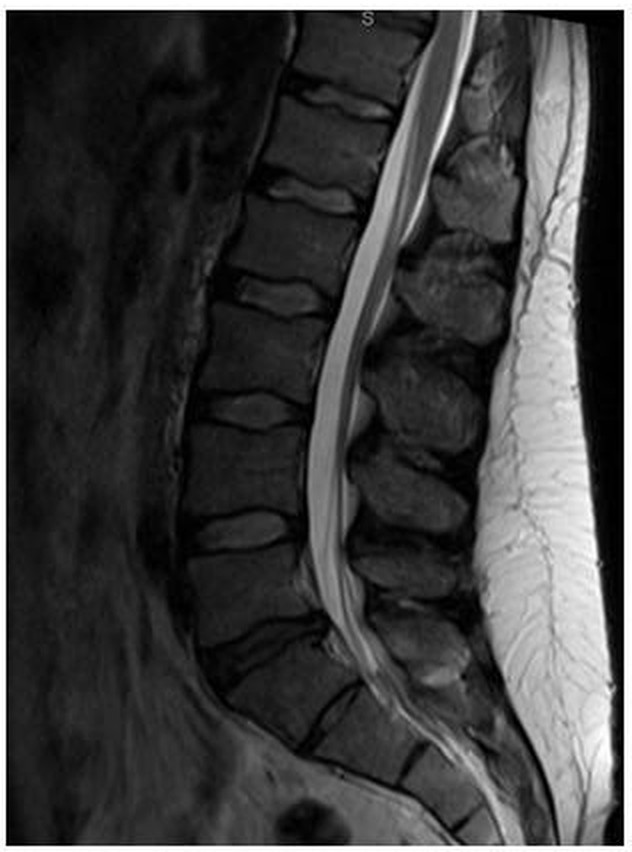
Nothing to point an arrow at — and that’s the finding.
The MRI covers the five lumbar vertebrae and the discs between them. Here there was no herniation, no fracture, no nerve compression — the pain generator was muscle and ligament, which never shows on a scan. That is exactly why the treatment was therapy and time, not an operation.
Region of symptoms — structurally normal
The course, in order
- Day 0Injury at workTwisting injury on the job — first episode, no leg pain, no red flags.
- First visitExam + MRINo red-flag findings; MRI shows no surgical lesion.
- Weeks 1–6Structured recoveryPT 2–3× per week, anti-inflammatories, modified duty for four weeks.
- Week 6Full dutyReleased without restrictions. No operation — and none needed.
Presentation
Acute low back pain after a twisting injury on the job — first episode, no leg pain, no red-flag findings.
Imaging
Lumbar MRI without a surgical lesion. Early MRI in work injuries is associated with longer claims and worse outcomes, so imaging is used deliberately, not reflexively.
Decision
This is not a surgical problem. Most work-related back episodes resolve within 6–12 weeks with the right plan.
What was done
Anti-inflammatories and muscle relaxants, physical therapy 2–3× per week for six weeks, modified duty for four weeks.
Full duty at 6 weeksNo restrictionsNo operation
"Knowing when not to operate is spine surgery too."
All cases shown are real patients treated by Dr. Andrew Pugely, presented with de-identified imaging for education. Every spine — and every recovery — is different: individual results vary, and nothing on this page is a guarantee of outcome or a substitute for an in-person evaluation.
Have a case like this one?
Complex, revision, and workers' compensation spine referrals are seen quickly — call the office or start with the workers' comp team.