BeforeAfter
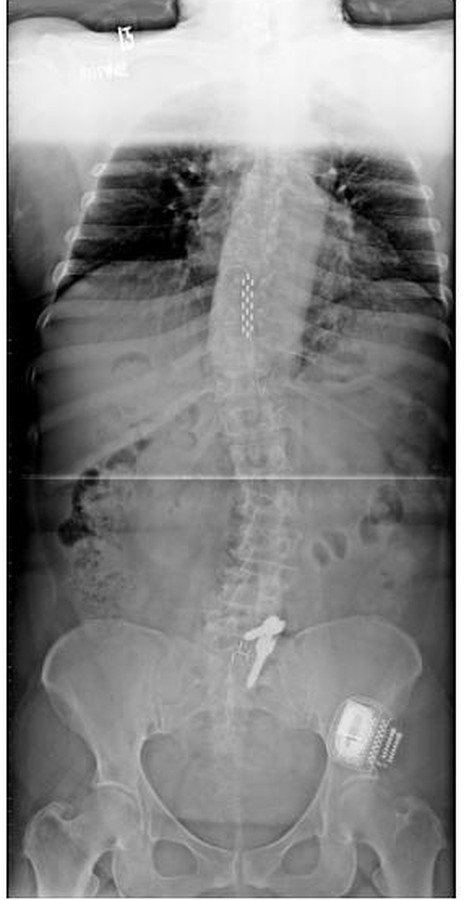
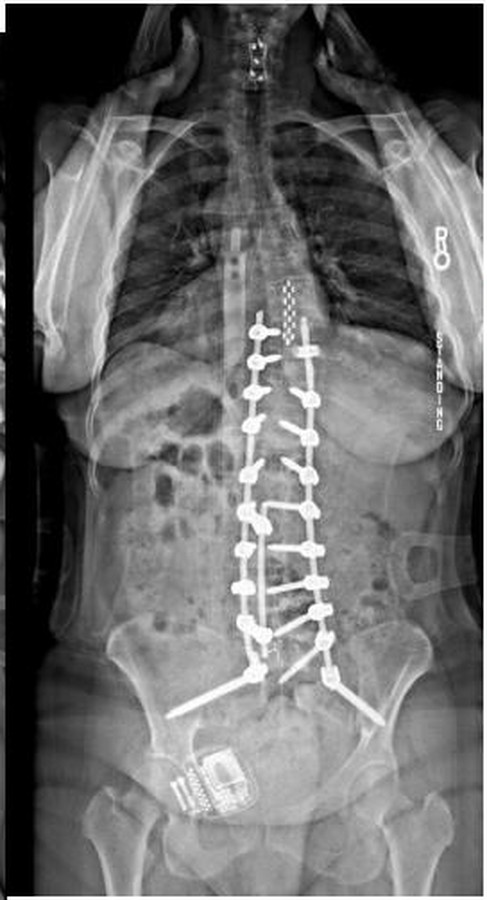
⇄
Drag to compare
The films
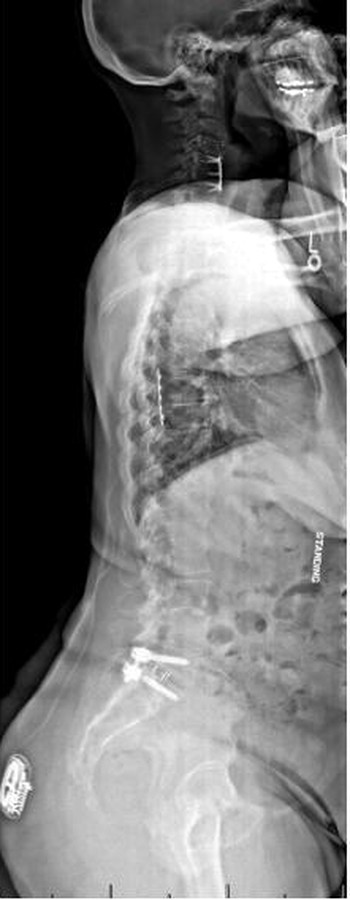
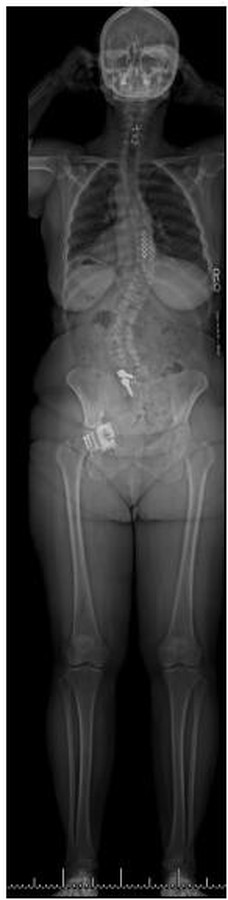
Where in the spine
Cervical
C1
C7
Thoracic
T1
T9◀ top of the new construct
T10
T11
T12
Lumbar
L1
L2
L3
L4
L5◀ prior L5-S1 fusion
Sacrum & pelvis
S1◀ anchored into the pelvis
Rebuilt from the mid-back to the pelvis.
The problem wasn’t one disc — it was alignment. Above the old L5-S1 fusion the spine drifted out of line for years, and a stimulator masked pain without fixing structure.
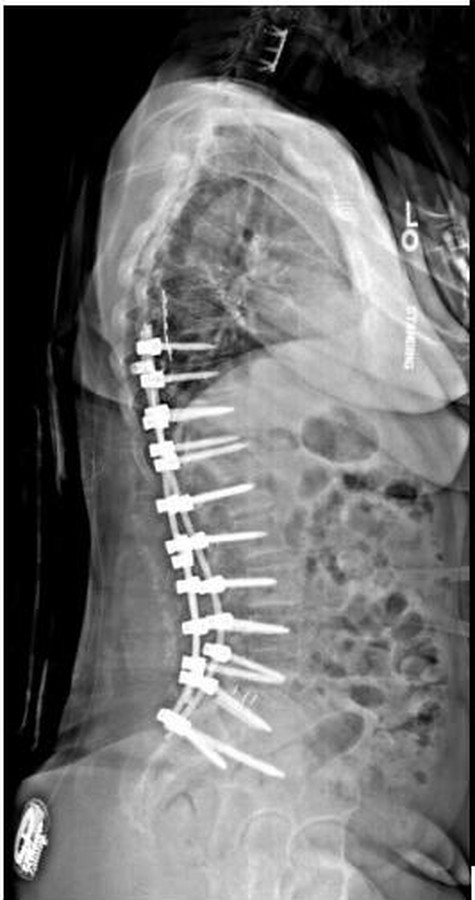
Correcting that means realigning the whole column and anchoring it where it can’t pull loose: instrumentation from T9 down into the pelvis itself.
New T9 → pelvis construct
Prior L5-S1 fusion
The course, in order
- Years agoL5-S1 fusionPain persisted after the original operation, then worsened with leg pain.
- LaterStimulator placedA device to mask pain — the structural problem was still there.
- WorkupFull-length standing filmsThe collapse above the old fusion finally measured, not guessed.
- SurgeryT9-to-pelvis reconstructionCollapsing segments realigned and stabilized, mid-back to pelvis.
Presentation
Years after an L5-S1 fusion, pain persisted and gradually worsened with leg pain. A spinal cord stimulator was placed — symptoms continued.
Imaging
Full-length standing films show the whole story: the old fusion, the stimulator hardware, and the spine drifting out of alignment above it.
Decision
When a device masks pain instead of fixing structure, the structural problem is still there. This is deformity-scale revision surgery — planned on full-length imaging, not a single MRI slice.
What was done
T9-to-pelvis posterior spinal fusion: the collapsing segments realigned and stabilized from the mid-back to the pelvis.
Failed prior fusionStimulator didn't solve itFull-length realignment
"Full-length films first — you can't fix alignment you never measured."
All cases shown are real patients treated by Dr. Andrew Pugely, presented with de-identified imaging for education. Every spine — and every recovery — is different: individual results vary, and nothing on this page is a guarantee of outcome or a substitute for an in-person evaluation.
Have a case like this one?
Complex, revision, and workers' compensation spine referrals are seen quickly — call the office or start with the workers' comp team.